ISQGD Mathematics Clubs & Student Chapters
The ISQGD Mathematics Clubs & Student Chapters initiative is an international academic outreach program of the International Society for Quality Growth and Development (ISQGD). It is designed to support mathematics clubs, student chapters, school groups, college and university communities, and independent learners by creating a welcoming global platform for mathematical talks, problem solving, outreach, communication, and academic community building.
Have Questions About ISQGD?
Many common questions about ISQGD, memberships, conferences, Mathematics Clubs & Student Chapters, the Probability & Statistics Club, certificates, publications, volunteer opportunities, and other educational activities are answered in our Frequently Asked Questions (FAQ).
Mathematics Clubs & Student Chapters Flyer
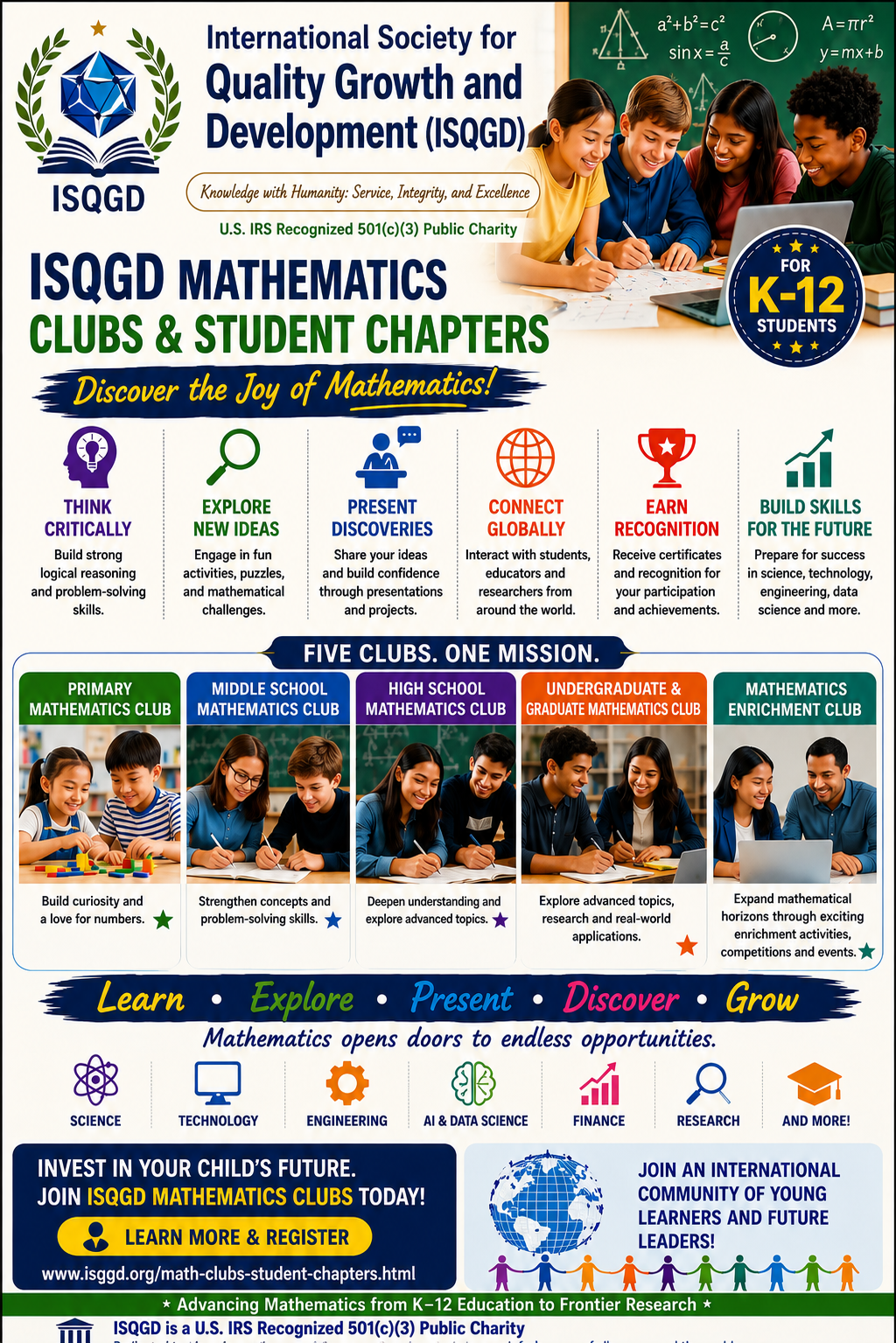
A printable flyer is available for circulation among children, students, educators, parents, schools, colleges, universities, mathematics clubs, and interested learners. The flyer highlights all five groups: Primary Mathematics Club, Middle School Mathematics Club, High School Mathematics Club, Undergraduate & Graduate Mathematics Club, and Mathematics Enrichment Club. Click the small flyer image to open a larger version for viewing or sharing. You may also use the button below to download the complete flyer as a single-page PNG file.
Why Give a Talk through ISQGD Mathematics Clubs & Student Chapters?
Parents and teachers may naturally ask why a child or student should prepare and give a mathematical talk. A well-supported, age-appropriate presentation can help a young learner deepen understanding, organize ideas, communicate clearly, build confidence, respond thoughtfully to questions, and become better prepared for future classrooms, interviews, higher education, professional life, and responsible leadership.
ISQGD also welcomes educators, researchers, professionals, university students, independent scholars, and mathematics enthusiasts who wish to share educational, expository, historical, enrichment, interdisciplinary, or research-related ideas with an international academic community. Every suitable presentation can inspire curiosity, encourage collaboration, support learners, and strengthen mathematical communication.
Guidance for Parents, Teachers, Students, and Other Speakers
The following companion pages explain the educational and professional value of giving talks at ISQGD. The first page is especially helpful for parents, guardians, school teachers, and young learners. The second page is intended for educators, researchers, professionals, university students, and other adult speakers.
Contents
- Overview
- Why Give a Talk through ISQGD Mathematics Clubs & Student Chapters?
- Registration and Speaker Membership
- Affiliation of Mathematics Clubs with ISQGD
- Approved Affiliated Clubs & Student Chapters
- Purpose and Vision
- Activities
- Weekly Schedule and Presentation Guidelines
- Regular Activities and Periodic ISQGD Conferences
- Who May Attend or Participate as Speakers
- Coordination
- Contact
Overview
ISQGD Mathematics Clubs & Student Chapters is a global academic initiative of ISQGD created to encourage mathematical learning, discussion, outreach, and student-centered academic engagement at different levels. The initiative brings together young learners, undergraduate and graduate students, teachers, researchers, speakers, organizers, and mathematical enthusiasts through talks, discussions, problem-solving activities, and collaborative educational programs.
Many schools, colleges, and universities already have mathematics clubs, student circles, seminar groups, or informal communities where students and teachers meet to discuss mathematics beyond the classroom. These local efforts are valuable because they develop curiosity, confidence, creativity, communication skills, and a deeper appreciation of mathematics.
ISQGD does not seek to replace such local clubs or student groups. Rather, ISQGD aims to support, strengthen, and connect them by offering an international academic framework, opportunities for invited talks and student presentations, access to a broader network of speakers and educators, and a platform for mathematical communication across countries and institutions.
Through this initiative, a local mathematics club or student group may become part of a wider global mathematical community while continuing to preserve its own local identity, leadership, and academic interests.
Participant Registration — ISQGD Mathematics Clubs & Student Chapters
The ISQGD Mathematics Clubs & Student Chapters initiative welcomes children, students, educators, schools, colleges, universities, mathematics clubs, and mathematical communities from around the world. General attendance as an audience member in ISQGD Mathematics Clubs activities is free and open to interested children, students, parents, educators, and other learners. Speaker participation, meaning giving a talk or presentation, follows the applicable ISQGD Annual Speaker Membership and talk-registration guidelines.
To support meaningful and age-appropriate mathematical engagement, the initiative is organized into five categories: Primary Mathematics Club, Middle School Mathematics Club, High School Mathematics Club, Undergraduate and Graduate Mathematics Club, and Mathematics Enrichment Club. Online attendance as an audience member in regular club activities is free and open to everyone. Individuals who wish to give talks or presentations under an ISQGD Mathematics Club should register through the applicable annual speaker membership pathway.
Individuals who wish to give a talk, presentation, workshop, or enrichment activity are considered speakers and should follow the appropriate talk-registration and annual speaker membership process. Regular informal Mathematics Club talks do not include presentation certificates. Certificates are issued only for designated ISQGD conferences, workshops, special sessions, mini-courses, or other formal events when a certificate policy is explicitly announced.
Active members may give multiple Mathematics Club talks or presentations during their active membership period, subject to scheduling availability, topic suitability, academic appropriateness, and ISQGD program guidelines. These talks are intended for learning, practice, outreach, mentoring, problem solving, mathematical communication, enrichment, and academic confidence-building.
Informal Mathematics Club talks may or may not be recorded. If recorded, the recordings are generally for internal or administrative purposes and are not normally posted publicly. Presentation certificates are not issued for informal Mathematics Club talks.
Active ISQGD members may also receive a 20% discount on eligible ISQGD meeting registration fees, including Mathematics Club conferences, selected special sessions, workshops, mini-courses, and other designated ISQGD academic events, whenever applicable. Active members may also receive a 20% discount on the optional Enhanced Verification Certificate processing fee.
Formal ISQGD conferences, Mathematics Club conferences, workshops, mini-courses, and special sessions may have separate registration requirements, public archiving policies, and certificate policies according to the rules of the specific event.
Payments, Donations, Memberships, Events & Certificates
Weekly Schedule and Presentation Guidelines
To help students, parents, teachers, speakers, Volunteers, and affiliated clubs plan systematically, ISQGD maintains a weekly schedule and presentation-guidelines document for the Mathematics Clubs & Student Chapters initiative. The document provides an organized framework for regular meeting times, presentation expectations, speaker coordination, and age-appropriate academic planning.
Parents and students are encouraged to review this document before planning a talk, so that each presentation can be prepared in a clear, confident, and well-structured manner.
Primary Mathematics Club (Kindergarten to Fifth Grade)
Elementary / Primary School Level
The Primary Mathematics Club is designed to nurture mathematical curiosity, creativity, confidence, and enjoyment among young learners through engaging and age-appropriate mathematical activities.
- Mathematical curiosity and creativity
- Recreational mathematics
- Puzzles and games
- Mental mathematics
- Basic logical thinking
- Fun mathematical activities
Middle School Mathematics Club (6th Grade to 8th Grade)
Middle School Level
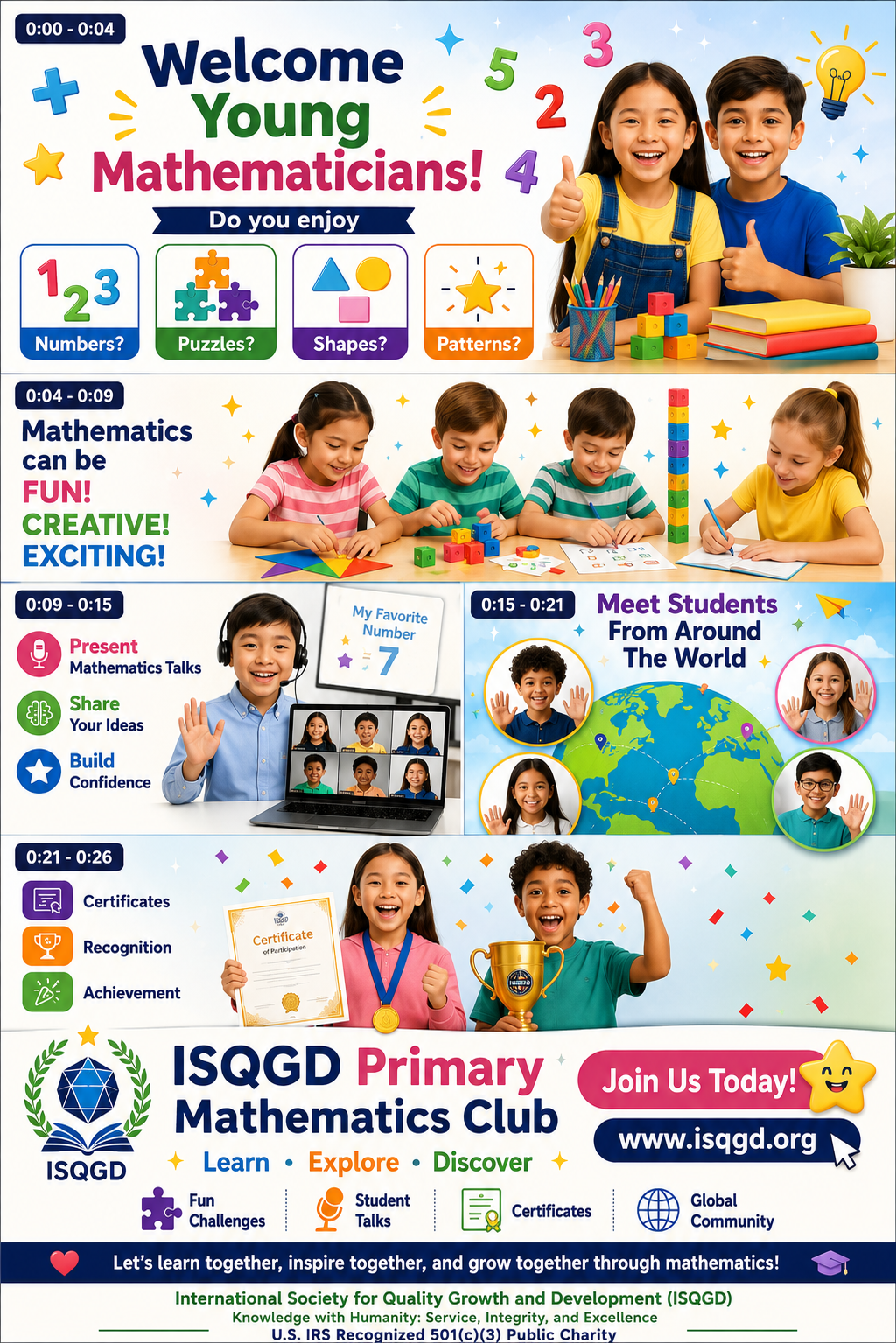
The Middle School Mathematics Club supports children and students in developing problem-solving skills, logical reasoning, mathematical communication, and early exposure to deeper mathematical ideas.
- Problem-solving
- Olympiad foundations
- Logical reasoning
- Mathematical communication
- Team activities
- Introductory research exposure
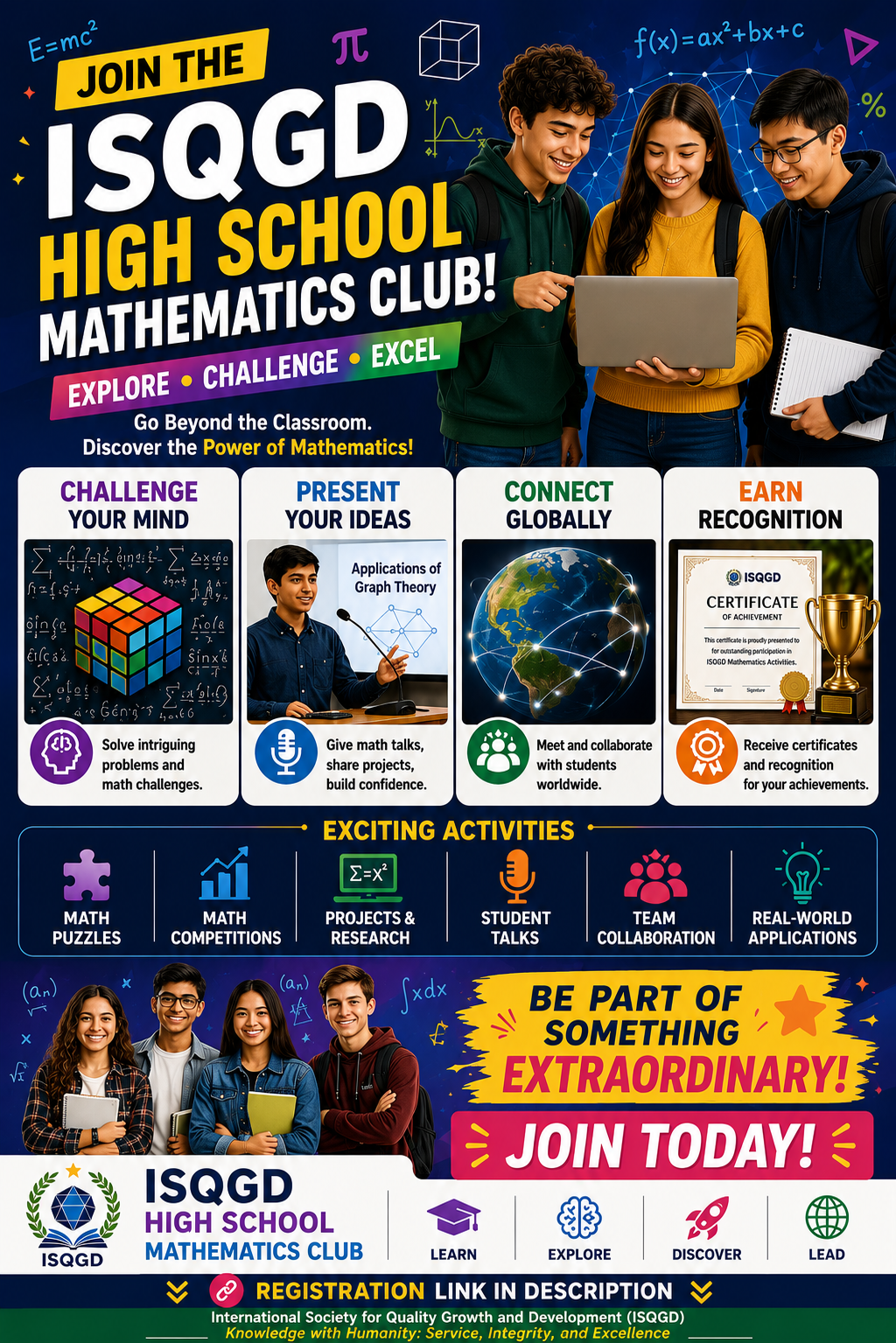
High School Mathematics Club (9th Grade to 12th Grade)
High School Level
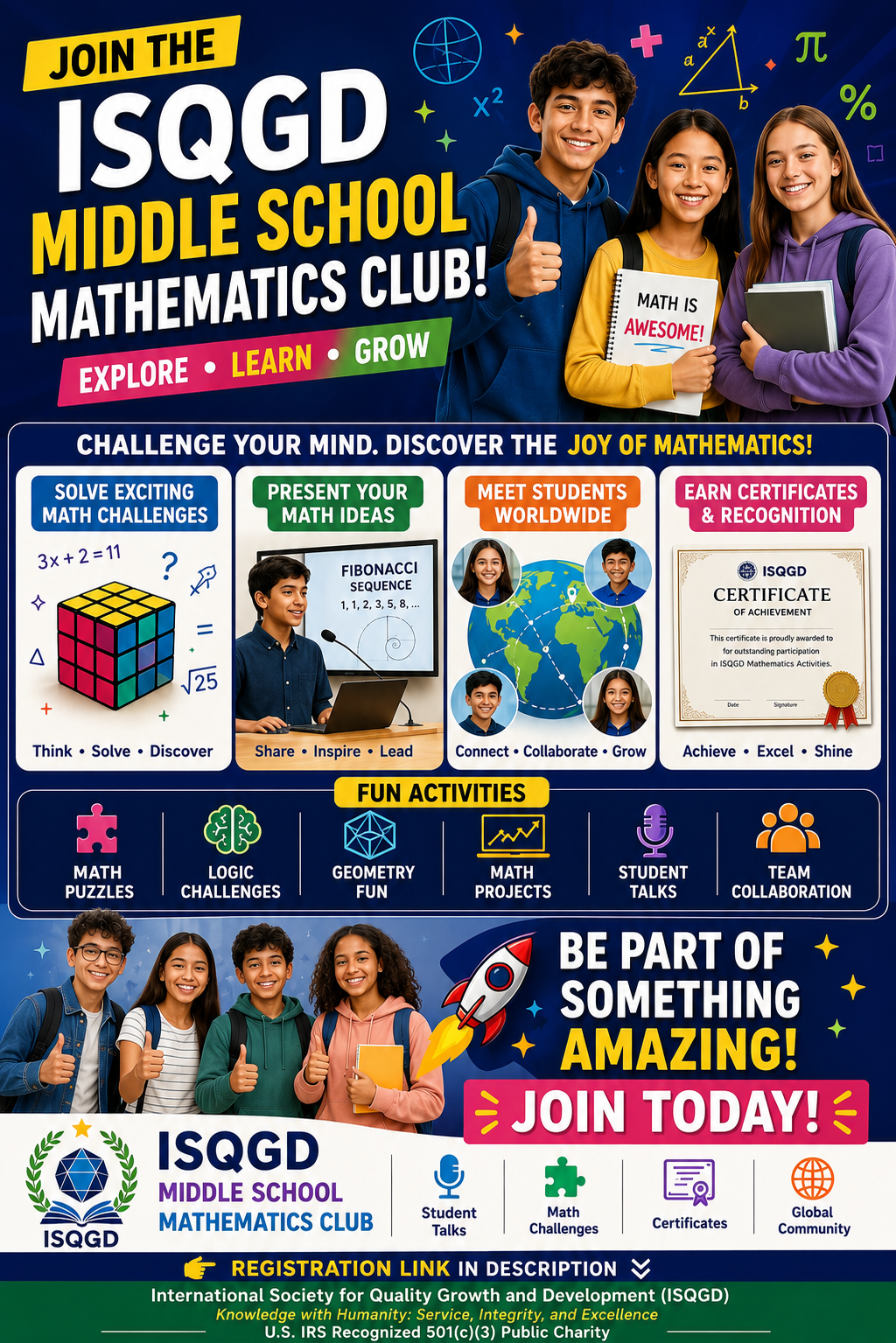
The High School Mathematics Club is intended for students interested in advanced problem-solving, mathematical contests, student presentations, research exposure, mentorship, and preparation for higher studies in mathematics and related fields.
- Olympiads and contests
- Advanced problem-solving
- Mathematical talks
- Research exposure
- Student presentations
- Mentorship programs
- College preparation
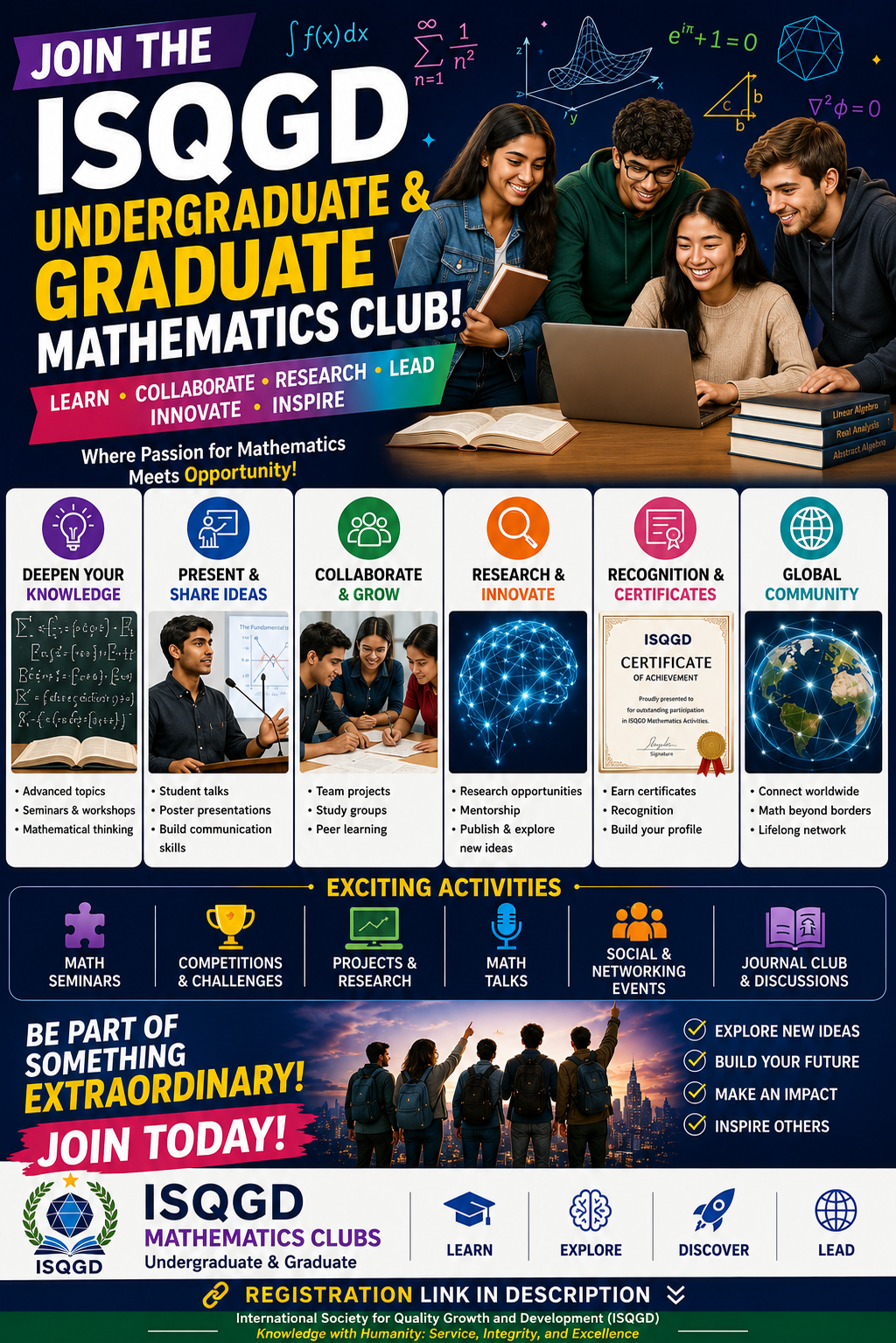
Undergraduate and Graduate Mathematics Club
College / University Level
The Undergraduate and Graduate Mathematics Club provides a platform for university students to engage in research seminars, reading groups, student presentations, academic collaboration, and professional mathematical development.
- Research seminars
- Reading groups
- Student research presentations
- Graduate preparation
- Collaboration
- Academic networking
- Expository talks
- Interdisciplinary mathematics
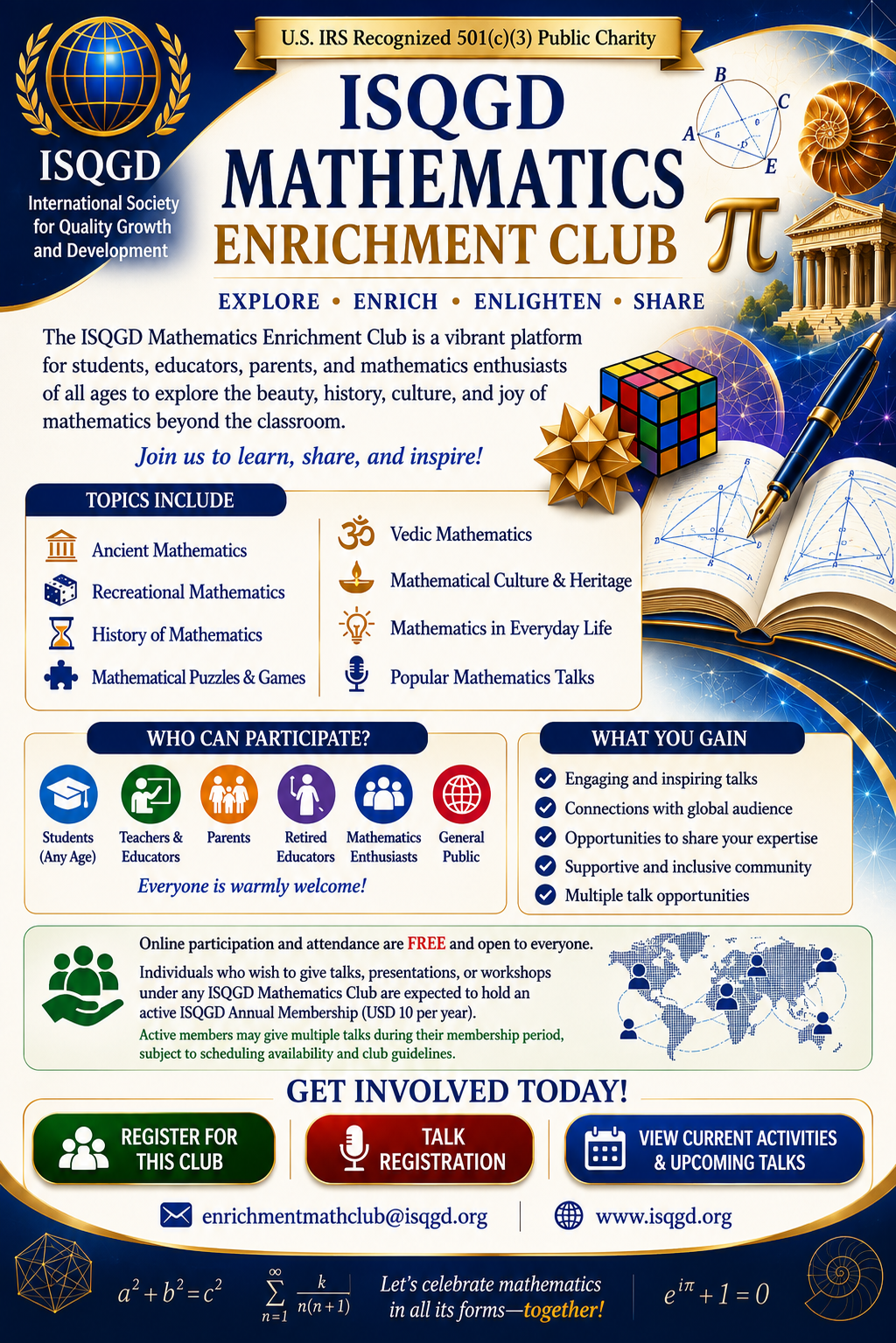
Mathematics Enrichment Club
Community Enrichment Level
The Mathematics Enrichment Club is a broad and welcoming ISQGD club for mathematical enrichment, cultural appreciation, recreational exploration, public communication, and lifelong learning. This club is designed for those who enjoy mathematics beyond the standard classroom or formal research setting and who wish to share accessible, inspiring, and meaningful mathematical ideas with a wide audience.
This name is broad enough to include a wide range of topics, including:
- Ancient Mathematics
- Recreational Mathematics
- History of Mathematics
- Mathematical Puzzles and Games
- Vedic Mathematics
- Mathematical Culture and Heritage
- Mathematics in Everyday Life
- Popular Mathematics Talks
The Mathematics Enrichment Club naturally welcomes children, students, teachers, parents, retired educators, mathematics enthusiasts, and members of the general public. Online attendance as an audience member is free and open to everyone. Individuals who wish to give talks may register as active ISQGD Club Speakers through the annual speaker membership pathway. Active members may give multiple talks or presentations during their active membership period, subject to scheduling availability, topic suitability, academic appropriateness, and ISQGD program guidelines.
Affiliation of Mathematics Clubs with ISQGD
Existing mathematics clubs, school mathematics groups, college and university student mathematical societies, independent math circles, and educational outreach communities may apply to become affiliated with the ISQGD Mathematics Clubs & Student Chapters initiative. The purpose of affiliation is to connect local mathematical communities with the broader international ISQGD network while allowing each affiliated club to preserve its own local identity, leadership structure, and academic activities.
Affiliation with ISQGD is intended to be academic, educational, and community-oriented. It gives a participating club formal recognition as an affiliated mathematics club or student chapter of ISQGD for a defined period, together with opportunities for international visibility, collaboration, participation in ISQGD activities, and future involvement in ISQGD Mathematics Clubs conferences.
ISQGD Affiliated Clubs & Student Chapters
The official list of ISQGD affiliated mathematics clubs and student chapters will be maintained in the linked Google Sheet below. Only clubs and student chapters officially affiliated with the International Society for Quality Growth and Development (ISQGD) will be included in this list.
This list is maintained by ISQGD and is updated periodically following the official affiliation process.
Basic Requirements for Affiliation
A mathematics club or student chapter applying for affiliation with ISQGD should satisfy the following general requirements:
- The club should be mathematics-related and educational in nature.
- The club should support mathematical learning, discussion, problem solving, outreach, student presentations, seminars, or related academic activities.
- The club should have at least one responsible faculty advisor, teacher, mentor, organizer, or coordinator.
- The club should agree with the educational mission of ISQGD and the purpose of the ISQGD Mathematics Clubs & Student Chapters initiative.
- The club should organize or participate in meaningful mathematical activities during the affiliation period.
- The club should maintain respectful academic conduct and responsible communication with ISQGD.
- The club should not misuse the ISQGD name, logo, certificate, affiliation status, or academic platform.
- The club should not represent itself as legally owned, controlled, accredited, or financially managed by ISQGD.
Affiliation Period and Renewal
Affiliation will normally be granted for one year from the date of approval. Renewal will be considered annually based on the club’s performance, activity, responsiveness, and alignment with the educational mission of ISQGD. A short annual activity summary may be requested before renewal.
Renewal may consider whether the club organized talks, student presentations, problem-solving sessions, outreach activities, mathematics discussions, or participated in ISQGD-related academic programs. The purpose of this requirement is not to create unnecessary bureaucracy, but to ensure that affiliated clubs remain active, responsible, and genuinely connected with the ISQGD mathematical community.
Annual Affiliation Fee
The standard annual affiliation fee for an approved ISQGD Mathematics Club or Student Chapter is USD 50. The fee is valid for one year from the date of approval and helps support ISQGD educational and outreach activities, including global mathematical programs, student activities, academic archiving, publicity, website maintenance, certificates, and international community development.
| Category | Fee / Status |
|---|---|
| Standard Annual Affiliation | USD 50 |
| Annual Renewal | USD 50 |
| Approved Hardship Waiver or Reduction | Possible, subject to review by ISQGD |
| Validity | One year from the date of approval |
Since ISQGD is an international educational organization serving children, students, and communities in many countries, fee waivers or reduced fees may be considered in special circumstances for financially constrained schools, student groups, or mathematical communities.
Benefits of Affiliation
- Official recognition as an affiliated mathematics club or student chapter of ISQGD for one year.
- Eligibility to be listed on the ISQGD website and in official ISQGD announcements as an affiliated mathematics club or student chapter.
- Permission, during the valid affiliation period, to use the phrase “Affiliated with ISQGD Mathematics Clubs & Student Chapters” in an appropriate academic manner.
- Each affiliated club or student chapter may receive up to ten (10) complimentary Mathematics Club talk or presentation opportunities per year on the ISQGD platform, subject to scheduling availability, topic suitability, and standard academic review procedures.
- Opportunity to organize mathematical talks, student presentations, outreach activities, problem-solving sessions, and local academic programs under the ISQGD Mathematics Clubs & Student Chapters framework.
- Opportunity, subject to availability and coordination, to use the ISQGD Zoom network and international academic platform for selected talks, workshops, student presentations, outreach activities, and mathematical discussions with worldwide participation.
- Active ISQGD members associated with an affiliated club may be eligible for a 20% discount on registration fees for ISQGD Mathematics Clubs conferences and selected ISQGD academic events, whenever applicable.
- Opportunity to participate in periodic ISQGD Mathematics Clubs conferences, including possible parallel sessions, invited lectures, contributed talks, student sessions, workshops, and academic discussions.
- International visibility through ISQGD announcements, schedules, website listings, newsletters, social media, and academic communication channels, when appropriate.
- Opportunity to collaborate with a broader international network of students, teachers, researchers, speakers, organizers, mathematics clubs, and educational communities.
- Access to official ISQGD affiliation documentation, letters of participation, or certificates only where specifically applicable and announced by ISQGD.
- Opportunity to propose joint activities, special events, outreach programs, or collaborative mathematics initiatives with ISQGD.
Regular Activities and Official Conferences
ISQGD distinguishes between informal Mathematics Club activities and formal ISQGD Mathematics Clubs conferences. Informal club talks, student discussions, problem-solving sessions, and local outreach activities are intended to remain flexible, educational, and community-oriented. These informal activities may or may not be recorded. If they are recorded, the recordings may be kept only for internal or administrative purposes and are not normally posted publicly. Presentation certificates are not issued for informal Mathematics Club talks.
Periodically, ISQGD may also organize formal Mathematics Clubs conferences featuring registration-based participation, multiple parallel sessions, invited lectures, contributed talks, student presentations, official recording, selected archiving, and certificates. For such formal conferences, talk recordings may be posted publicly only according to the conference policy and speaker consent. Certificates may be issued to registered speakers, presenters, organizers, or registered conference participants according to the specific rules of the conference. Regular audience attendance in informal Mathematics Club activities does not automatically include a certificate.
Purpose and Vision
The purpose of this initiative is to make mathematics more accessible, inspiring, and internationally connected. It supports the broader ISQGD mission of advancing mathematics from K–12 education to higher research by encouraging curiosity, creativity, communication, collaboration, and long-term academic engagement.
The initiative is especially intended to help students and educators build active mathematical communities where learning is not limited to formal coursework, but also includes exploration, discussion, presentation, problem solving, outreach, and interaction with a wider mathematical world.
- To promote a strong and inclusive mathematical culture among children, students, and young learners.
- To support existing mathematics clubs, student circles, and informal academic groups.
- To encourage the creation of new ISQGD Student Chapters where appropriate.
- To provide opportunities for invited talks, student presentations, and interactive discussions.
- To encourage problem solving, mathematical exposition, creative exploration, and public communication of mathematics.
- To connect local mathematics communities with the broader international ISQGD network.
- To help children and students develop confidence in presenting, explaining, and discussing mathematical ideas.
Program Activities
Through this initiative, ISQGD may organize, support, publicize, and coordinate a wide range of mathematical activities suitable for different levels of learners, institutions, and communities. Activities may be local, online, hybrid, national, or international, depending on the needs of the participating groups and the availability of speakers and organizers.
These activities may include, but are not limited to, the following:
Mathematics Talks
Invited talks by speakers, educators, researchers, children, students, and mathematical enthusiasts on topics suitable for school, college, university, and general audiences.
Problem-Solving Sessions
Interactive sessions focused on mathematical reasoning, olympiad-style problems, recreational mathematics, logical thinking, and creative problem solving.
Student Presentations
Opportunities for children and students to present mathematical ideas, expository topics, projects, reading reports, and exploratory work in a supportive academic environment.
Outreach and Community Activities
Programs that connect mathematics with schools, local communities, teachers, parents, and young learners through accessible and inspiring activities.
Regular Activities and Periodic ISQGD Conferences
The ISQGD Mathematics Clubs & Student Chapters initiative is designed to support regular mathematical interaction, children and student engagement, educational outreach, and international academic collaboration through talks, presentations, problem-solving activities, enrichment programs, and related mathematical events organized under ISQGD.
Attendance at regular club activities is generally open to audience members, but some activities may require prior registration for planning purposes. Speaker participation, formal event participation, or event-specific enrollment may require separate registration, speaker approval, membership, or fees depending on the structure, scope, and organizational requirements of the program. Children, students, teachers, schools, colleges, universities, existing mathematics clubs, and independent mathematical communities from around the world are encouraged to participate in appropriate ISQGD activities and programs.
ISQGD may periodically organize international conferences, mathematics club conferences, thematic workshops, student presentation events, special sessions, invited lecture series, outreach activities, and other formal academic programs under this initiative. Such programs may include parallel sessions, invited talks, contributed presentations, student sessions, panel discussions, and additional academic components.
Depending on the nature and scale of the event, ISQGD may collect annual membership fees, event registration fees, conference participation fees, affiliation fees, optional enhanced certificate processing fees, or other administrative fees associated with the organization and management of academic programs and activities.
These contributions help support conference organization, technical infrastructure, website maintenance, academic archiving, certificates, publicity, communication systems, administrative coordination, student outreach activities, and the broader educational and academic mission of ISQGD as a U.S. IRS Recognized 501(c)(3) Public Charity.
Who May Attend or Participate as Speakers
The ISQGD Mathematics Clubs & Student Chapters initiative is designed to be broad, inclusive, and international. Audience attendance is open to individuals and groups interested in mathematical learning, communication, collaboration, outreach, and academic interaction. Individuals who wish to speak, present, or organize formal activities should follow the applicable speaker registration, membership, and program-coordination guidelines.
- Students from schools, colleges, and universities who wish to attend as audience members or, when properly registered, deliver informal Mathematics Club talks.
- Existing mathematics clubs and student mathematical societies.
- Teachers, educators, mentors, and outreach organizers.
- Researchers, speakers, and mathematical professionals.
- Schools, colleges, universities, and educational communities interested in participating in mathematical activities and outreach programs.
- Independent learners and mathematical enthusiasts interested in participating in ISQGD activities.
Program Coordination
The initiative will be operated by ISQGD as part of its academic programs. Activities may be coordinated by ISQGD leadership together with appointed Volunteers and members of the ISQGD Program Coordination Team. The Volunteers may assist with communication, scheduling, speaker coordination, participant registration, publicity, event planning, and the development of mathematics club and student chapter activities.
ISQGD welcomes motivated children, students, teachers, researchers, and organizers who are interested in helping develop this initiative. The program may grow through local, national, and international participation while remaining connected to the broader ISQGD mission of service, education, outreach, and global mathematical collaboration.
Local organizers are encouraged to propose talks, identify children and student speakers, suggest outreach activities, and communicate with the appropriate ISQGD Volunteers so that activities can be coordinated in an organized and academically meaningful way.
Explore More Opportunities at ISQGD
Continue exploring related ISQGD educational programs, conferences, outreach initiatives, and academic clubs.
Contact
Speakers, educators, children, students, schools, colleges, universities, mathematics clubs, and mathematical communities interested in giving talks or organizing mathematical activities under the ISQGD Mathematics Clubs & Student Chapters initiative are warmly encouraged to contact the appropriate ISQGD Volunteers listed below.
Regional Directors of ISQGD Mathematics Clubs & Student Chapters
To facilitate effective international coordination across different time zones, the ISQGD Mathematics Clubs & Student Chapters initiative operates through two broad regional divisions: the Eastern Hemisphere and the Western Hemisphere. These divisions are intended solely for organizational convenience and scheduling purposes.
The Regional Directors work in close coordination with one another to support children, students, teachers, speakers, schools, colleges, universities, mathematics clubs, and educational communities around the world. Although activities are organized through Eastern Hemisphere and Western Hemisphere schedules for administrative convenience, the ISQGD Mathematics Clubs & Student Chapters initiative operates as a single international program. Participants may request to present in either schedule, subject to availability and program coordination. Accordingly, a participant from the Eastern Hemisphere may present during a Western Hemisphere session, and a participant from the Western Hemisphere may present during an Eastern Hemisphere session whenever appropriate.
Individuals interested in giving a talk, organizing a presentation, proposing a mathematical activity, or seeking information about a particular Mathematics Club are encouraged to contact the Volunteers of the corresponding club category listed below. The Volunteers serve as the primary points of contact and assist with communication, speaker coordination, scheduling, registration guidance, and program development. When appropriate, matters may also be coordinated with the Regional Directors to facilitate participation across different regions and time zones.
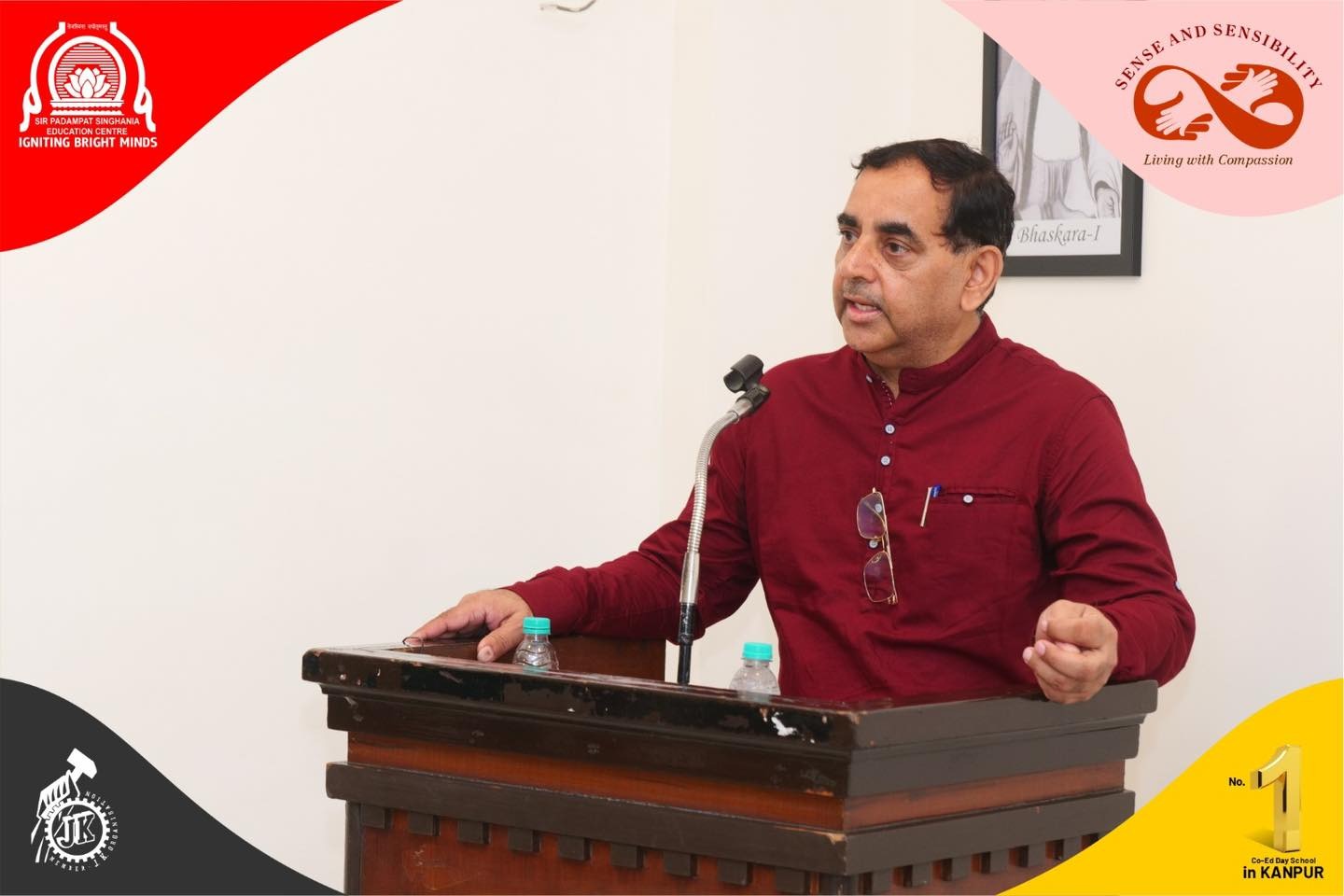
Regional Director (Eastern Hemisphere)
ISQGD Mathematics Clubs & Student Chapters
✉ rakesh.bhatia@isqgd.org
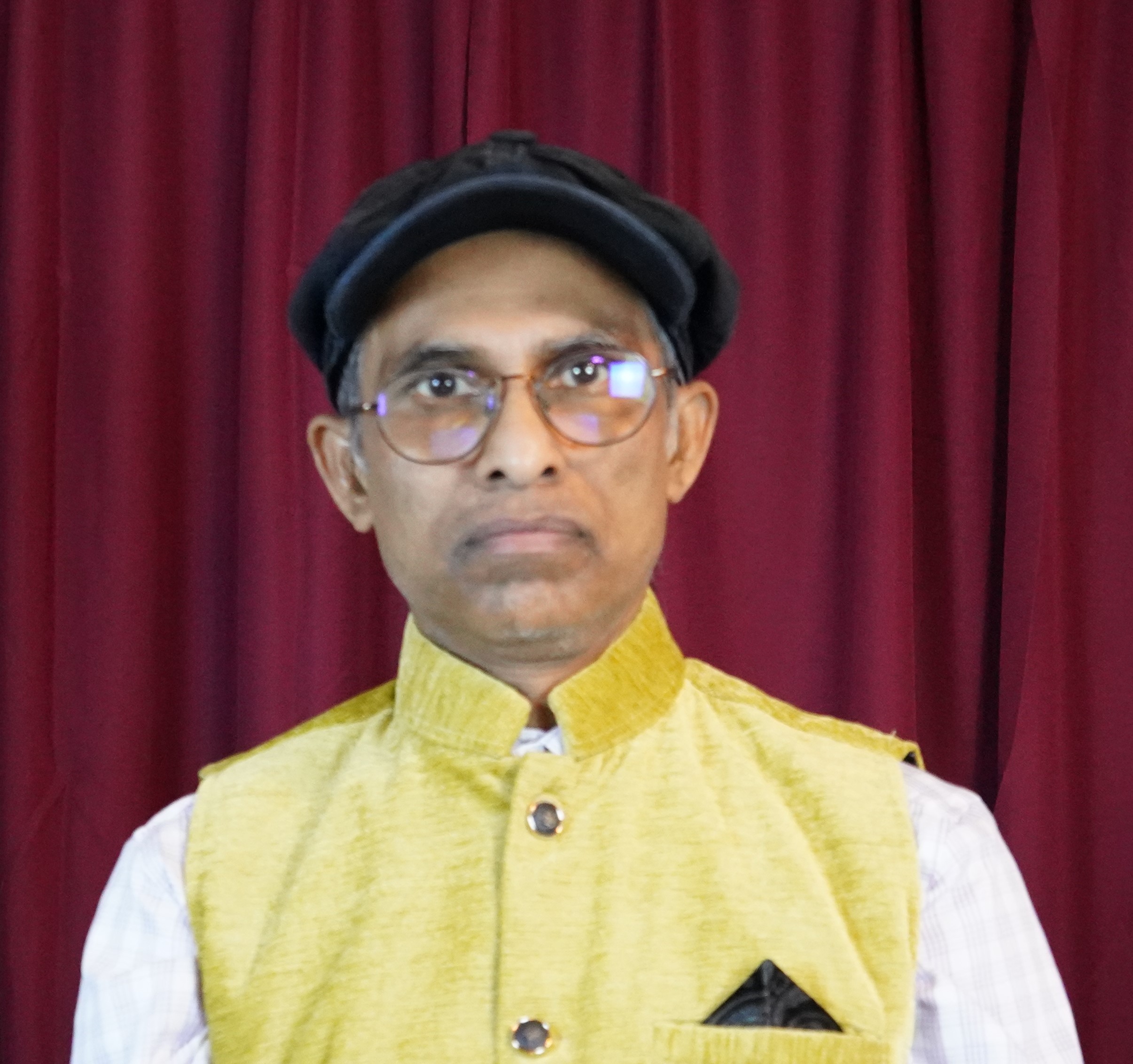
Regional Director (Western Hemisphere)
ISQGD Mathematics Clubs & Student Chapters
✉ mrinal.roychowdhury@isqgd.org
The following Volunteers assist with communication, scheduling, speaker coordination, participant registration, publicity, and development of ISQGD Mathematics Clubs & Student Chapters activities. Their complete professional information is available through the permanent profile links below.
Coordinator, Primary Mathematics Club
isqgd-volunteers.html#poonam-vashishta
isqgd-volunteers.html#divya-mahajan
isqgd-volunteers.html#jyoti-tewari
isqgd-volunteers.html#rajneesh-kumar
Coordinator, Middle School Mathematics Club
isqgd-volunteers.html#parul
isqgd-volunteers.html#meenu-manocha
isqgd-volunteers.html#jyoti-tewari
isqgd-volunteers.html#poonam-vashishta
isqgd-volunteers.html#rajneesh-kumar
Coordinator, High School Mathematics Club
isqgd-volunteers.html#richa-sharma
isqgd-volunteers.html#poonam-vashishta
isqgd-volunteers.html#rajneesh-kumar
Coordinator, Undergraduate and Graduate Mathematics Club
isqgd-volunteers.html#megha-pandey
isqgd-volunteers.html#swapnil-deepakrao-malegaonkar
isqgd-volunteers.html#richa-jain
isqgd-volunteers.html#pavjeet-singh
isqgd-volunteers.html#archana-margam
Coordinator, Mathematics Enrichment Club
isqgd-volunteers.html#rakesh-bhatia