ISQGD Special Sessions
This page presents upcoming Special Sessions of the International Society for Quality Growth and Development (ISQGD) and provides information for researchers, educators, and qualified academic teams who wish to propose and organize a future Special Session under the auspices of ISQGD. Some Special Sessions are organized independently, while others form part of a broader ISQGD Conference and are identified accordingly by conference and session codes.
ISQGD Annual Membership
Join a growing international academic community and enjoy more opportunities to learn, share research, and collaborate. ISQGD will organize numerous Special Sessions, international conferences, and other academic activities throughout the year, bringing together scholars, educators, and students from around the world.
Enjoy a 20% discount on eligible ISQGD activities with active Annual Membership. We warmly encourage interested participants and prospective speakers to explore membership and its benefits. Annual Membership is optional, and applicable discounts are subject to the terms of each activity.
ISQGD Annual Membership Card & BenefitsHave Questions About ISQGD?
Many common questions about ISQGD memberships, special sessions, conferences, ISQGD academic clubs, ISQGD Books, certificates, publications, volunteer opportunities, and other academic and educational activities are answered in our Frequently Asked Questions (FAQ).
Organize an ISQGD Special Session or International Conference
We cordially invite our registered participants, previous speakers, colleagues, researchers, educators, and friends worldwide to submit proposals to organize a Special Session or International Conference under the auspices of the International Society for Quality Growth and Development (ISQGD).
ISQGD welcomes everyone, from every part of the world, to participate in its academic activities and propose events throughout the year.
We encourage academic initiatives from individuals and institutions across countries, regions, and disciplines. Proposals may be submitted at any time, and approved events may be scheduled on weekdays or weekends, according to mutually convenient dates and participant availability.
Propose focused research topics, emerging developments, interdisciplinary themes, or educational initiatives. Help scholars worldwide exchange knowledge and establish meaningful collaborations.
ISQGD can assist with announcements, publicity, speaker registration, online meeting arrangements, scheduling, technical coordination, and related administration. Session organizers lead the academic program and speaker invitations.
To begin, send your proposed title, preferred dates, and a brief description of the academic scope to the ISQGD Chair or ISQGD Office. We will be pleased to review your proposal and discuss possible arrangements. Special Sessions may be held independently or as part of an ISQGD Conference.
How to propose an event: Select Submit an Event Proposal to open an email addressed to office@isqgd.org. The template asks for organizers’ names, affiliations (including country), and email addresses; a corresponding organizer; the proposed title and theme; preferred dates; and at least six potential speakers with affiliations. Speaker names may be tentative; please identify confirmed participants accurately. Complete the fields before sending.
Questions? Contact the ISQGD Chair or ISQGD Office.
Academic Inclusivity and Equal Recognition
The International Society for Quality Growth and Development (ISQGD) is committed to fostering scholarly excellence, academic inclusivity, meaningful intellectual exchange, and international collaboration.
Equal Academic Recognition
ISQGD values and respects every speaker’s scholarly contribution, regardless of academic rank, institutional affiliation, geographical location, or career stage. Every participant is welcomed as an important member of the international academic community.
No Formal Speaker Hierarchy
ISQGD generally follows an inclusive presentation format without distinctions such as Keynote or Plenary Talks. Every presentation is recognized as a valuable contribution to the academic program, and all speakers are accorded equal respect and academic recognition.
Special Lectures Under Exceptional Circumstances
ISQGD may arrange Special Lectures, commemorative addresses, or extended presentations under exceptional academic or commemorative circumstances. These arrangements enrich the academic program without establishing a hierarchy among participating scholars.
ISQGD believes that the true distinction of an academic gathering lies not in the titles assigned to its speakers, but in the quality of ideas shared, the advancement of knowledge, and the meaningful connections established among scholars worldwide.
Upcoming Special Sessions & Quick Navigation
ISQGD Special Sessions
ISQGD Special Sessions are thematically focused academic programs that bring together invited and contributed talks around clearly defined mathematical, scientific, engineering, educational, technological, or interdisciplinary topics. They are typically organized by researchers, educators, or qualified academic teams and are designed to encourage concentrated scholarly exchange, collaboration, and exploration of emerging directions. Some Special Sessions are independent ISQGD programs, while others are organized as part of an ISQGD Conference; conference-linked sessions retain their conference and session identifiers, such as ISQGD–C03–SS20.
Date: November 7–8, 2026 (Saturday–Sunday)
Format: Online via Zoom
Official Time Zone: U.S. Central Time (America/Chicago)
Organizer: International Society for Quality Growth and Development (ISQGD)
🌍 Global Scheduling & Time-Zone Coordination
The International Society for Quality Growth and Development (ISQGD) will organize this two-day international Special Session as a focused forum for researchers, faculty members, postdoctoral scholars, graduate students, and other qualified participants working in Functional Analysis, Operator Theory, Harmonic Analysis, and related applications. The session is intended to encourage scholarly exchange across foundational theory, modern developments, and applications connecting analysis with mathematical physics, dynamical systems, signal and image processing, probability, partial differential equations, and other areas.
Academic Scope
The session welcomes original research presentations, methodological and theoretical contributions, expository talks of broad mathematical interest, computational work, and carefully prepared presentations connecting the central themes with other areas of pure and applied mathematics. Interdisciplinary contributions are welcome when functional-analytic, operator-theoretic, or harmonic-analytic methods form a substantial part of the work.

Professor Palle Jorgensen
President, International Society for Quality Growth and Development (ISQGD)
Professor Emeritus of Mathematics, University of Iowa, USA
Fellow of the American Mathematical Society
Professor Palle Jorgensen is Professor Emeritus of Mathematics at the University of Iowa and a Fellow of the American Mathematical Society. Before joining the University of Iowa, he taught at Stanford University and the University of Pennsylvania. His research spans both pure and applied mathematics, with major interests in operator algebras, functional and harmonic analysis, operator theory, probability and stochastic analysis, dynamical systems, mathematical physics, wavelets, signal and image processing, and related areas.
His recent research includes wavelet theory, multiresolution methods, subdivision algorithms, image processing, spectral-tile duality, scaling, and fractals. His broader research interests also include representation theory, analysis on graphs, statistical inference, partial differential equations, and mathematical aspects of quantum information. Professor Jorgensen earned his Ph.D. from Aarhus University.
University of Iowa Profile: math.uiowa.edu/people/palle-jorgensen
Personal Academic Webpage: homepage.divms.uiowa.edu/~jorgen/
Presentation Format
Regular speaking slots are 30 minutes — 25 minutes for the presentation, followed by 5 minutes for questions, discussion, and transition to the next talk. The Keynote Address by Professor Palle Jorgensen is scheduled for November 7, 9:00–10:00 AM U.S. Central Standard Time (60 minutes).
November 7–8, 2026 • All presentation times are in U.S. Central Standard Time (CST).
Speaker Registration Fees
The permanent ISQGD event rates below apply to eligible individuals presenting talks. Active ISQGD Annual Members receive the 20% discounted rates shown below:
• Primary / Middle / High School Student Speaker: USD 10
• Annual Member — Primary / Middle / High School Student: USD 8
• Undergraduate / Graduate Student / Independent Scholar / Teacher / Lecturer Speaker: USD 15
• Annual Member — Undergraduate / Graduate Student / Independent Scholar / Teacher / Lecturer: USD 12
• Faculty / Postdoctoral Researcher Speaker: USD 20
• Annual Member — Faculty / Postdoctoral Researcher: USD 16
Organizer: International Society for Quality Growth and Development (ISQGD)
General Special Session Inquiries
✉ office@isqgd.org
Date: November 7, 2026 (Saturday)
Format: Online via Zoom
Official Time Zone: U.S. Central Time (America/Chicago)
Organizer: International Society for Quality Growth and Development (ISQGD)
🌍 Global Scheduling & Time-Zone Coordination
The International Society for Quality Growth and Development (ISQGD) will organize this international Special Session as a focused forum for researchers, faculty members, postdoctoral scholars, graduate students, and other qualified participants working in Fractal Geometry, Dynamical Systems, Geometric Measure Theory, and closely related areas. The session is intended to encourage scholarly exchange across modern dimension theory, deterministic and random fractals, iterated function systems, ergodic methods, geometric and probabilistic aspects of dynamical systems, and related developments.
Academic Scope
The session welcomes original research presentations, methodological and theoretical contributions, expository talks of broad mathematical interest, computational work, and carefully prepared presentations connecting fractal geometry and dynamical systems with other areas of mathematics. Representative topics include fractal geometry; geometric measure theory; Hausdorff and packing dimensions; dimension theory; self-similar, self-affine, and self-conformal sets and measures; deterministic and random fractals; iterated function systems, including systems with overlaps; hyperbolic and nonconformal dynamical systems; symbolic dynamics; ergodic theory; thermodynamic formalism; invariant and stationary measures; projections and sections of fractal sets; random dynamical systems; complex networks; and related areas. The listed topics are representative rather than exhaustive.
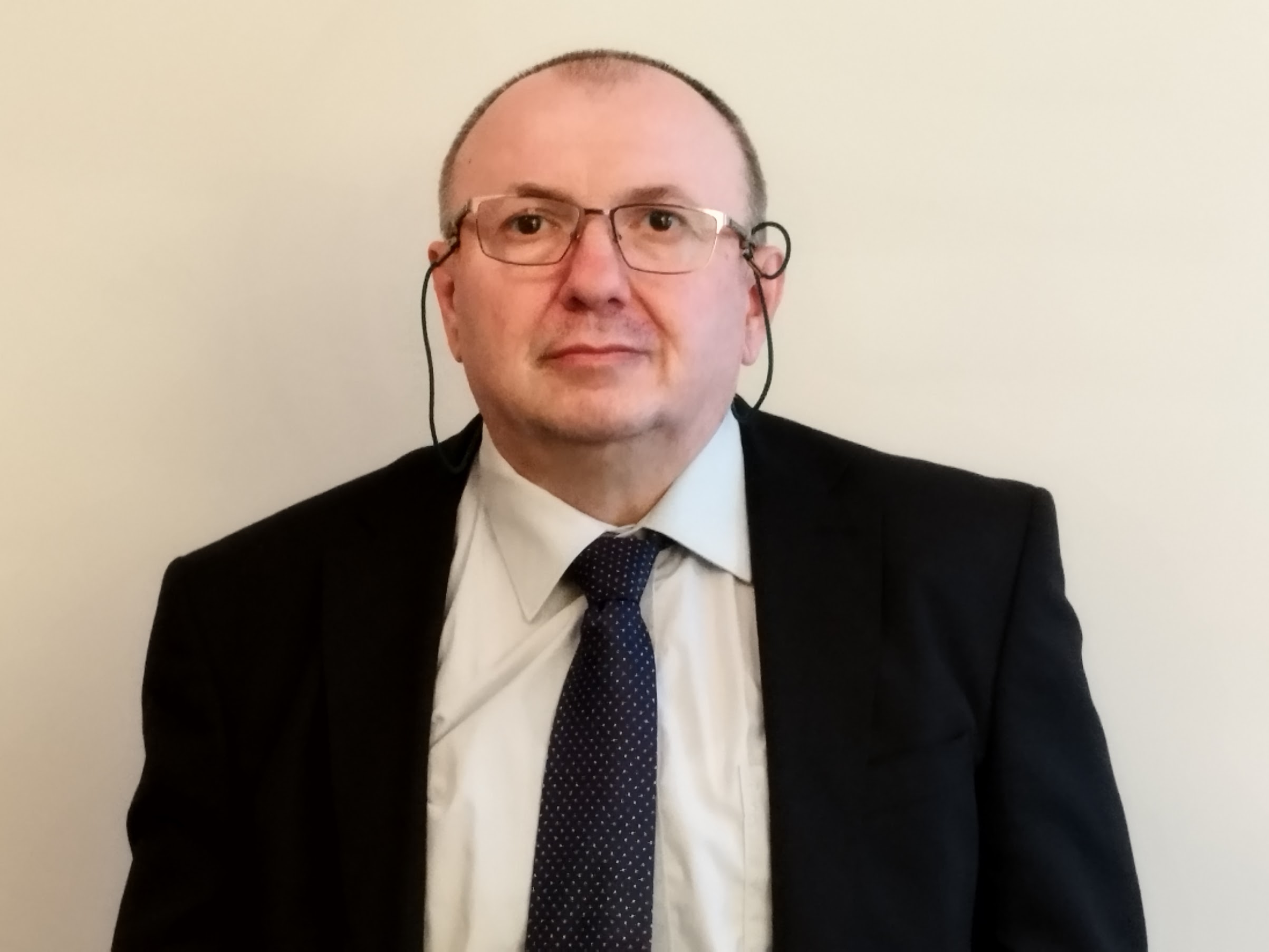
Professor Károly Simon
Professor of Mathematics, Budapest University of Technology and Economics (BME), Hungary
Head, Doctoral School of Mathematics and Computer Science, BME
Corresponding Member, Hungarian Academy of Sciences
Professor Károly Simon is Professor of Mathematics at the Budapest University of Technology and Economics (BME), where he serves as Head of the Doctoral School of Mathematics and Computer Science. He is a Corresponding Member of the Hungarian Academy of Sciences. His principal research interests include fractal geometry, dynamical systems, geometric measure theory, and complex networks.
Professor Simon has worked extensively on the Hausdorff dimension and Hausdorff measure of attractors arising from deterministic and random hyperbolic dynamical systems, as well as on random fractals, iterated function systems, dimension theory, and related problems in one-dimensional dynamics and real analysis. His research has included influential work on self-similar and self-conformal sets, random iterated function systems, fractal percolation, projections and sections of fractal sets, and dimension questions in dynamical systems.
He received his Ph.D. from the Hungarian Academy of Sciences and later earned the D.Sc. degree of the Hungarian Academy of Sciences. His research achievements have been recognized by several honors, including the Academy Prize and the Bolyai Plaquette of the Hungarian Academy of Sciences. He has delivered invited and plenary lectures and advanced courses at international conferences and research institutes in Europe, Asia, Australia, and the Americas.
Personal Academic Webpage: math.bme.hu/~simonk/
BME Department Profile: random.math.bme.hu/simon-karoly
Presentation Format
Regular speaking slots are 30 minutes — 25 minutes for the presentation, followed by 5 minutes for questions, discussion, and transition to the next talk. The Keynote Address by Professor Károly Simon is scheduled for November 7, 9:00–10:00 AM U.S. Central Standard Time (60 minutes).
Saturday, November 7, 2026 • 8:00–11:30 AM U.S. Central Standard Time (CST).
Speaker Registration Fees
The permanent ISQGD event rates below apply to eligible individuals presenting talks. Active ISQGD Annual Members receive the 20% discounted rates shown below:
• Primary / Middle / High School Student Speaker: USD 10
• Annual Member — Primary / Middle / High School Student: USD 8
• Undergraduate / Graduate Student / Independent Scholar / Teacher / Lecturer Speaker: USD 15
• Annual Member — Undergraduate / Graduate Student / Independent Scholar / Teacher / Lecturer: USD 12
• Faculty / Postdoctoral Researcher Speaker: USD 20
• Annual Member — Faculty / Postdoctoral Researcher: USD 16
Organizer: International Society for Quality Growth and Development (ISQGD)
General Special Session Inquiries
✉ office@isqgd.org
Date: November 14–15, 2026 (Saturday–Sunday)
Format: Online via Zoom
Official Time Zone: U.S. Central Time (America/Chicago)
Organizer: International Society for Quality Growth and Development (ISQGD)
🌍 Global Scheduling & Time-Zone Coordination
The International Society for Quality Growth and Development (ISQGD) will organize this two-day international Special Session as a focused forum for researchers, faculty members, postdoctoral scholars, graduate students, and other qualified participants working in Fixed Point Theory, Nonlinear Analysis, and Applications. The session aims to advance scholarly exchange on the existence, uniqueness, approximation, and stability of solutions to nonlinear mathematical problems, with particular emphasis on fixed point principles, nonlinear mappings, iterative methods, and their applications across pure and applied mathematics.
Academic Scope
The session welcomes original research presentations, theoretical and methodological advances, expository talks of broad mathematical interest, computational contributions, and applications in which fixed point or nonlinear-analytic methods play a central role. Representative topics include classical and modern fixed point theorems; contraction principles and generalized contractions; fixed points in metric, Banach, Hilbert, and ordered spaces; topological fixed point methods; nonexpansive mappings; common, coupled, and coincidence points; multivalued fixed point theory; iterative schemes, convergence, and approximation of fixed points; best proximity point theory; nonlinear operator equations; variational inequalities and equilibrium problems; and applications to nonlinear differential and integral equations, boundary value problems, optimization, and related areas. The listed topics are representative rather than exhaustive.
Presentation Format
All speaking slots are 30 minutes — 25 minutes for the presentation, followed by 5 minutes for questions, discussion, and transition to the next talk.
Faculty members, researchers, postdoctoral scholars, graduate and undergraduate students, educators, independent scholars, and other qualified participants are welcome to register for a presentation and submit the title and abstract of their talk. As speaking slots are limited, early submission is strongly encouraged.
Registration, Title, and Abstract Submission Deadline: November 7, 2026.
Important: Due to the limited number of presentation slots, interested speakers are strongly encouraged to submit their presentation title and abstract at their earliest convenience rather than waiting until the deadline.
Speaker Registration Fees
The permanent ISQGD event rates below apply to eligible individuals presenting talks. Active ISQGD Annual Members receive the 20% discounted rates shown below:
• Primary / Middle / High School Student Speaker: USD 10
• Annual Member — Primary / Middle / High School Student: USD 8
• Undergraduate / Graduate Student / Independent Scholar / Teacher / Lecturer Speaker: USD 15
• Annual Member — Undergraduate / Graduate Student / Independent Scholar / Teacher / Lecturer: USD 12
• Faculty / Postdoctoral Researcher Speaker: USD 20
• Annual Member — Faculty / Postdoctoral Researcher: USD 16
Organizer: International Society for Quality Growth and Development (ISQGD)
General Special Session Inquiries
✉ office@isqgd.org
Date: November 14–15, 2026 (Saturday–Sunday)
Format: Online via Zoom
Official Time Zone: U.S. Central Time (America/Chicago)
Organizer: International Society for Quality Growth and Development (ISQGD)
🌍 Global Scheduling & Time-Zone Coordination
The International Society for Quality Growth and Development (ISQGD) is pleased to organize this international Special Session on Artificial Intelligence: Theory, Methods, and Applications. The session provides a forum for researchers, faculty members, postdoctoral scholars, graduate students, and other qualified participants to share theoretical advances, new methods, computational developments, and applications of artificial intelligence across mathematics, science, engineering, education, and related disciplines.
Academic Scope
The session welcomes original research presentations, theoretical and methodological contributions, computational studies, and carefully developed interdisciplinary applications. Representative topics include mathematical foundations of artificial intelligence; machine learning and statistical learning; deep learning and neural networks; generative artificial intelligence and large language models; optimization methods and algorithms for AI; natural language processing; computer vision; reinforcement learning; explainable, trustworthy, and responsible AI; intelligent systems; and applications in science, engineering, healthcare, education, and other fields. The listed topics are representative rather than exhaustive.
Presentation Format
Regular speaking slots are 30 minutes — 25 minutes for the presentation, followed by 5 minutes for questions, discussion, and transition to the next talk.
Researchers, faculty members, postdoctoral scholars, graduate and undergraduate students, educators, independent scholars, and other qualified participants are invited to propose a presentation by submitting its title and abstract.
Abstract Submission Deadline: November 7, 2026.
Important: Due to the limited number of presentation slots, interested speakers are strongly encouraged to submit their presentation title and abstract at their earliest convenience rather than waiting until the deadline.
Speaker Registration Fees
The permanent ISQGD event rates below apply to eligible individuals presenting talks. Active ISQGD Annual Members receive the 20% discounted rates shown below:
• Primary / Middle / High School Student Speaker: USD 10
• Annual Member — Primary / Middle / High School Student: USD 8
• Undergraduate / Graduate Student / Independent Scholar / Teacher / Lecturer Speaker: USD 15
• Annual Member — Undergraduate / Graduate Student / Independent Scholar / Teacher / Lecturer: USD 12
• Faculty / Postdoctoral Researcher Speaker: USD 20
• Annual Member — Faculty / Postdoctoral Researcher: USD 16
Organizer: International Society for Quality Growth and Development (ISQGD)
General Special Session Inquiries
✉ office@isqgd.org
Date: December 5–6, 2026 (Saturday–Sunday)
Format: Online via Zoom
Official Time Zone: U.S. Central Time (America/Chicago)
Organizer: International Society for Quality Growth and Development (ISQGD)
🌍 Global Scheduling & Time-Zone Coordination
The International Society for Quality Growth and Development (ISQGD) is pleased to organize this two-day international Special Session on Topology, Geometry, Geometric Analysis, and Applications. The session provides a welcoming forum for mathematicians, researchers, postdoctoral scholars, students, and educators to share new research, explore connections across these fields, and develop international academic collaborations.
The program will bring together both theoretical and applied perspectives, emphasizing mathematical depth, exchange of ideas, and emerging research directions.
Academic Scope
The session welcomes original research presentations, new theoretical and methodological developments, expository talks of broad mathematical interest, and applications in which topological, geometric, or geometric-analytic ideas play a substantial role. Representative topics include:
These topics are representative rather than exhaustive. Related research is welcome when topology, geometry, or geometric analysis is central to the presentation.
Presentation Format
Regular speaking slots are 30 minutes — 25 minutes for the presentation, followed by 5 minutes for questions, discussion, and transition to the next talk.
Faculty members, researchers, postdoctoral scholars, graduate and undergraduate students, educators, and other qualified participants from around the world are welcome to submit a proposed presentation title and abstract. Early expressions of interest are encouraged.
Registration, Title, and Abstract Submission Deadline: November 15, 2026.
Important: Due to the limited number of presentation slots, interested speakers are strongly encouraged to submit their presentation title and abstract at their earliest convenience rather than waiting until the deadline.
Speaker Registration Fees
The permanent ISQGD event rates below apply to eligible individuals presenting talks. Active ISQGD Annual Members receive the 20% discounted rates shown below:
• Primary / Middle / High School Student Speaker: USD 10
• Annual Member — Primary / Middle / High School Student: USD 8
• Undergraduate / Graduate Student / Independent Scholar / Teacher / Lecturer Speaker: USD 15
• Annual Member — Undergraduate / Graduate Student / Independent Scholar / Teacher / Lecturer: USD 12
• Faculty / Postdoctoral Researcher Speaker: USD 20
• Annual Member — Faculty / Postdoctoral Researcher: USD 16
Organizer: International Society for Quality Growth and Development (ISQGD)
General Special Session Inquiries
✉ office@isqgd.org
Date: December 5–6, 2026 (Saturday–Sunday)
Format: Online via Zoom
Official Time Zone: U.S. Central Time (America/Chicago)
Organizer: International Society for Quality Growth and Development (ISQGD)
🌍 Global Scheduling & Time-Zone Coordination
The International Society for Quality Growth and Development (ISQGD) is pleased to organize this two-day international Special Session on Banach Spaces, Operator Theory, and Applications. The session brings together established researchers, early-career mathematicians, postdoctoral scholars, graduate students, and other qualified participants to discuss recent developments in the theory and geometry of Banach spaces, linear and nonlinear operator theory, and their connections with mathematical analysis.
By providing a focused forum for original research and meaningful scholarly exchange, the session seeks to highlight emerging directions, encourage international collaboration, and support young researchers working in these closely connected areas.
Academic Scope
The session welcomes original research, new theoretical and methodological contributions, expository presentations of broad mathematical interest, and applications in which Banach-space or operator-theoretic methods play a substantial role. Topics of interest include, but are not limited to, the following:
The above themes are representative rather than exhaustive. Contributions connecting Banach space theory and operator theory with other areas of pure or applied mathematics are also welcome.
Presentation Format
All speaking slots are 30 minutes — 25 minutes for the presentation, followed by 5 minutes for questions, discussion, and transition to the next talk.
Faculty members, researchers, postdoctoral scholars, graduate and undergraduate students, educators, independent scholars, and other qualified participants are welcome to register for a presentation and submit the title and abstract of their talk. As speaking slots are limited, early submission is strongly encouraged.
Registration, Title, and Abstract Submission Deadline: November 15, 2026.
Important: Due to the limited number of presentation slots, interested speakers are strongly encouraged to submit their presentation title and abstract at their earliest convenience rather than waiting until the deadline.
Speaker Registration Fees
The permanent ISQGD event rates below apply to eligible individuals presenting talks. Active ISQGD Annual Members receive the 20% discounted rates shown below:
• Primary / Middle / High School Student Speaker: USD 10
• Annual Member — Primary / Middle / High School Student: USD 8
• Undergraduate / Graduate Student / Independent Scholar / Teacher / Lecturer Speaker: USD 15
• Annual Member — Undergraduate / Graduate Student / Independent Scholar / Teacher / Lecturer: USD 12
• Faculty / Postdoctoral Researcher Speaker: USD 20
• Annual Member — Faculty / Postdoctoral Researcher: USD 16
Organizer: International Society for Quality Growth and Development (ISQGD)
General Special Session Inquiries
✉ office@isqgd.org
Date: February 20–21, 2027 (Saturday–Sunday)
Format: Online via Zoom
Official Time Zone: U.S. Central Time (America/Chicago)
Organizer: Dr. Sudeshna Basu, Department of Mathematics and Statistics, Loyola University Maryland, USA
🌍 Global Scheduling & Time-Zone Coordination
The International Society for Quality Growth and Development (ISQGD) will host this two-day international Special Session on Banach Space Theory, Operator Theory, and Applications, organized by Dr. Sudeshna Basu of Loyola University Maryland, USA. The session welcomes researchers, faculty, postdoctoral scholars, students, and other qualified participants to exchange ideas about the structure and geometry of Banach spaces, linear and nonlinear operators, and their applications in mathematical analysis.
Academic Scope
Topics of interest include the geometry and structure of Banach spaces; convexity, smoothness, and reflexivity; bounded, compact, and nonlinear operators; operator ideals and spectral theory; Banach lattices and function spaces; approximation properties and bases; Banach algebras; fixed point properties in Banach spaces; and related applications to functional analysis, differential and integral equations, and optimization. These topics are representative rather than exhaustive.
Session Organizer
Dr. Sudeshna Basu
Department of Mathematics and Statistics
Loyola University Maryland, USA
Email: sbasu1@loyola.edu
Presentation Format
Regular speaking slots are 30 minutes — 25 minutes for the presentation, followed by 5 minutes for questions and discussion.
Registration, Title, and Abstract Submission Deadline: November 15, 2026.
Important: Due to the limited number of presentation slots, interested speakers are strongly encouraged to submit their presentation title and abstract at their earliest convenience rather than waiting until the deadline.
Registration, Title and Abstract Submission Link: To be opened.
For academic inquiries about this Special Session, please contact the session organizer at sbasu1@loyola.edu.
Speaker Registration Fees
The permanent ISQGD event rates below apply to eligible individuals presenting talks. Active ISQGD Annual Members receive the 20% discounted rates shown below:
• Primary / Middle / High School Student Speaker: USD 10
• Annual Member — Primary / Middle / High School Student: USD 8
• Undergraduate / Graduate Student / Independent Scholar / Teacher / Lecturer Speaker: USD 15
• Annual Member — Undergraduate / Graduate Student / Independent Scholar / Teacher / Lecturer: USD 12
• Faculty / Postdoctoral Researcher Speaker: USD 20
• Annual Member — Faculty / Postdoctoral Researcher: USD 16
Host: International Society for Quality Growth and Development (ISQGD)
General Special Session Inquiries
✉ office@isqgd.org
December 21–23, 2026 — Ramanujan Conference Research Tracks
The ISQGD–C03 International Conference Celebrating the 139th Birth Anniversary of Srinivasa Ramanujan now includes two research tracks, with separate speaker registration arrangements, and an International Special Lecture Program on December 22. For the updated track descriptions and registration information, please visit the official ISQGD–C03 conference announcement.
Explore More Opportunities at ISQGD
Continue exploring the principal areas of ISQGD, including educational and academic programs, clubs, conferences and lectures, publications, outreach, participation, and opportunities for collaboration across the global academic community.