How to Teach Mathematics in Primary School: Simple and Effective Classroom Strategies
Abstract. Teaching mathematics at the primary level requires clarity, creativity, and meaningful connection to everyday life. This article presents practical classroom strategies that help teachers introduce mathematical concepts in a simple, engaging, and effective way. Emphasis is placed on activity-based learning, questioning techniques, visual support, and building confidence in young learners.
Teaching mathematics in primary school is not about presenting many rules or formulas. Rather, it is about helping children understand ideas in a natural, visual, and enjoyable way. A good lesson begins with something familiar, develops through activity, and leads gradually to understanding. When children feel that mathematics is connected to their world, they become more interested, more confident, and more willing to think independently.
1. Start with Real-Life Situations
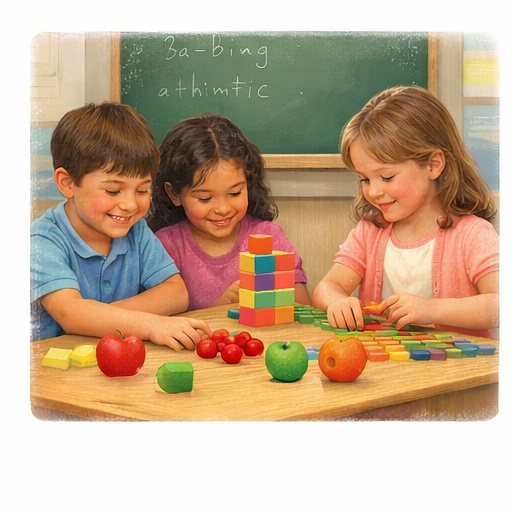
A lesson should begin with something children already know from daily life. For example, when teaching addition, one may use familiar objects such as pencils, books, fruits, or toys. A simple example such as “You have 2 apples, and I give you 3 more” allows the student to see the meaning of addition before encountering abstract symbols.
- Start from the child’s own environment.
- Use visible objects before symbolic notation.
- Let students describe what is happening in their own words.
2. Use Concrete Objects (Hands-On Learning)
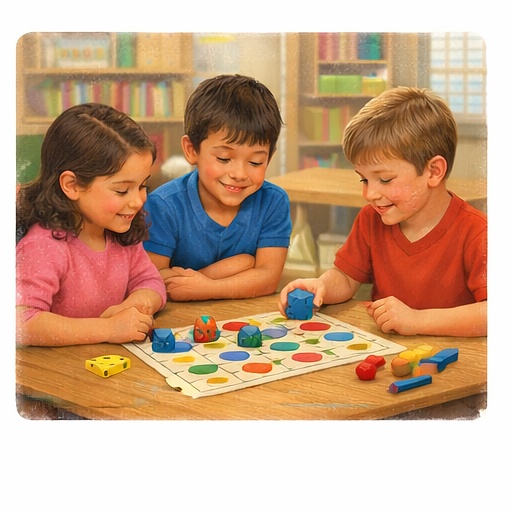
Young learners understand more effectively when they can touch, move, and see objects. Useful materials include blocks, beads, sticks, counters, or coins. For example, to teach subtraction, remove objects physically and let students observe what remains.
- Blocks, beads, sticks, or coins
- Drawings on the board
- Simple classroom materials
3. Move from Concrete to Abstract
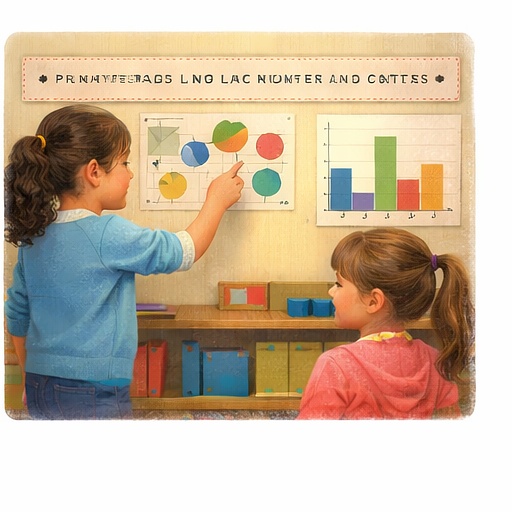
Effective teaching often follows three natural stages:
- Concrete: Use real objects
- Visual: Use pictures or diagrams
- Abstract: Introduce numbers and symbols
For instance, in teaching 3 + 2, first show 3 objects and 2 objects, then draw them, and finally write the equation. This gradual movement builds understanding with confidence.
Do not rush too quickly to symbols. If a child understands the idea first through objects and pictures, the symbolic form becomes far more meaningful.
4. Ask Guiding Questions
Instead of giving answers immediately, teachers should guide students by asking thoughtful questions such as:
- “What do you see?”
- “How did you get this answer?”
- “Can you try another way?”
Such questions develop mathematical thinking and strengthen confidence. They also encourage students to become active participants in the lesson rather than passive receivers of information.
5. Encourage Participation and Discussion
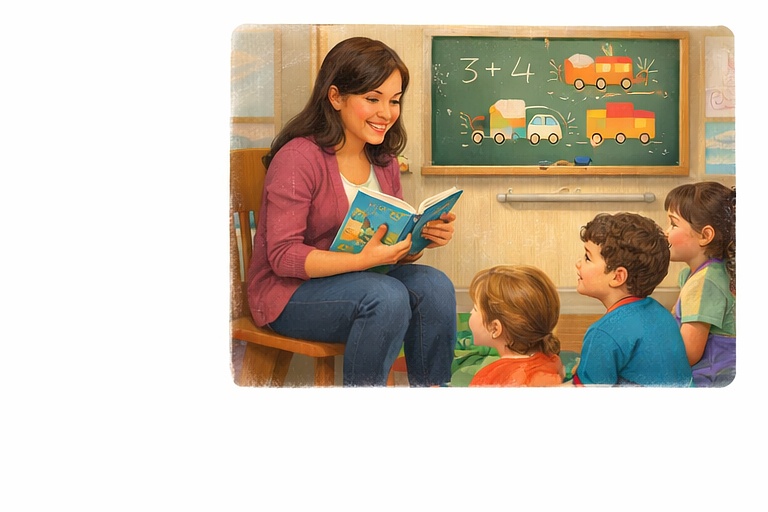
Students should be encouraged to explain their ideas in their own words. Even an incorrect answer can become a valuable learning opportunity. A classroom in which children talk about mathematics becomes more active, thoughtful, and engaging.
Story-based examples are especially effective because they connect mathematics with language, imagination, and daily life.
6. Use Games and Activities
Mathematics becomes more enjoyable when taught through games and interactive activities. Examples include counting games, number puzzles, matching shapes, and simple classroom competitions. Learning through play often improves both understanding and memory.
Give each child five counters. Ask them to make the number 5 in as many ways as possible: 4 + 1, 3 + 2, and 5 + 0. This simple activity introduces number composition, flexibility, and discussion.
7. Focus on Understanding, Not Memorization
Children should understand why a mathematical idea works, not simply memorize an answer. For example, instead of only memorizing that 5 + 3 = 8, students can build the two groups with objects and discover the result for themselves.
8. Build Confidence and Remove Fear
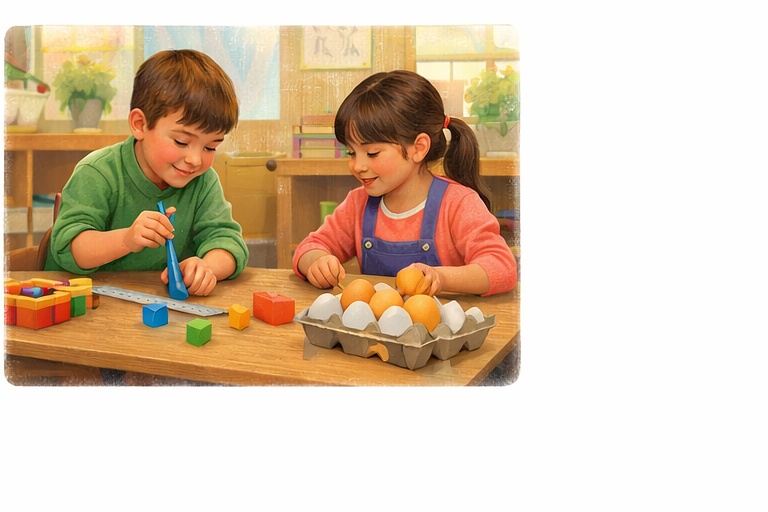
Many children feel anxious about mathematics from an early age. Teachers should therefore create a friendly and supportive environment in which mistakes are accepted as part of learning. Encouragement is often more powerful than correction.
When children feel safe, they are more willing to participate, ask questions, and explore new ideas.
Conclusion. Teaching mathematics effectively in primary school means making it simple, visual, interactive, and meaningful. When children enjoy learning mathematics, they develop confidence and curiosity; and curiosity, in turn, leads to deeper understanding and lasting interest. The teacher’s role is not only to present content, but also to open the door to discovery.